Building with Heart in the Age of AI

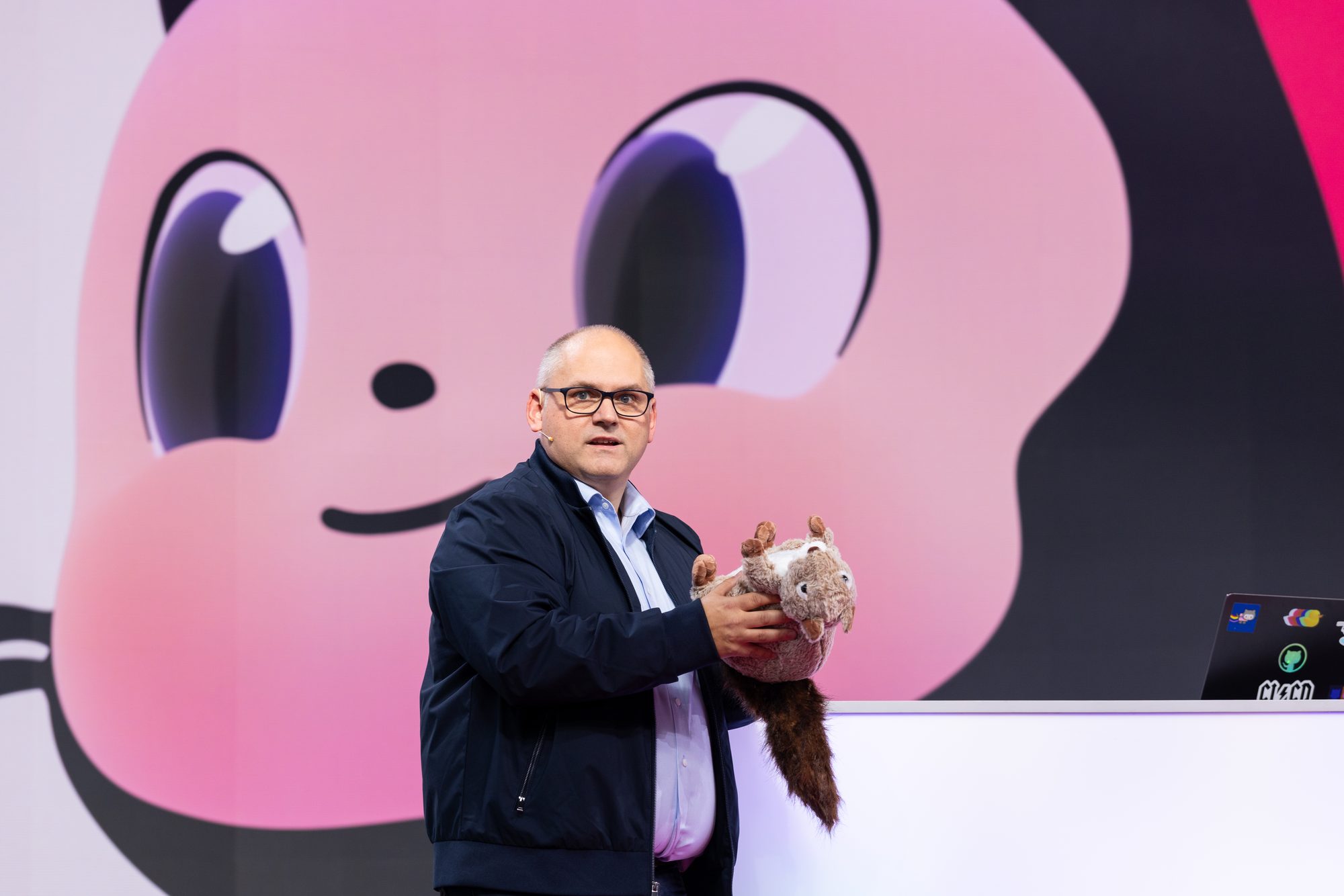
I closed out GitHub Universe this year with crowd-surfing plushies. a giant rubber duck, giving away a year of Copilot Max, and celebrating 10,000 steps on a conference badge like we’d just landed on the moon.
It was silly edutainment. It was meant to be. Because underneath all the whimsy was the most serious point I wanted to leave people with:
AI doesn’t write the story. You do.
We are living through the biggest technological shift I’ve seen in my long career. AI unquestionably makes us faster. But faster at what?
If you’ve got time, grab a cuppa and watch the whole thing. There are ducks and stats. But if you prefer to read, here’s the heart of it.
Software engineering is at an epoch
The numbers from this year’s Octoverse report are genuinely bonkers:
- 225 million+ developers now build on GitHub.
- 17.9 billion pushes in the past 12 months – more than 2024 and 2025 combined.
- 1.3 billion merged pull requests. That’s 3.5 million a day.
- 40%+ of pull requests now start with an agent writing the first draft. In March, it was 17%.
And honestly? A lot of it is wonderful. People are building the apps they always wanted to build but never had the time – or the skills – to make. That’s a huge amount of creativity being unleashed on the world.
But not everything is ready to commit
Here’s the bit we don’t talk about enough on the big stage.
Just because it’s easier to create than ever, doesn’t mean everything is ready to commit.
Not all of those new pull requests are diamonds. Some are bad ideas. Some are barely ideas at all. Slop.
Open source has always followed what I call the contribution funnel. Lots of people use a project; a small number contribute. And the thing that kept that balance healthy was, frankly, friction. You had to learn the code. You had to learn how the community worked. You had to care enough to get through the door. GitHub made it easier when we invented the pull request and that helped open source communities thrive.
But AI removed a lot of that friction – which is brilliant when I’m hacking on a weekend project, and less brilliant when a well-meaning stranger fires off a pull request to a library they’ve never used, maintained by a volunteer giving up their evenings to keep code running that the rest of us depend on. My friend Ashley Wolf said it best when she talks about The New Eternal September of Open Source.
I’ve spent much of my career looking after open source maintainers. Them’s good peoples. They’re the reason any of this works. So this one matters to me:
Open source is the freedom to inspect, to remix and to share without asking permission – but it is not the freedom to impose your will on others.
Fork it. Remix it. Make it yours. You don’t need to ask permission, the license gives you all the permission you need. But it’s up to the maintainer whether your change goes back in. But they are the ones that will have to look after it is they take it in, that’s why they are called maintainers. Declining the changes that came out of your LLM, that’s not gatekeeping – that’s respect. If they wanted those changes they have access to the same LLM’s you do.
AI can carry the toil, so people can keep the joy
The good news? It’s not all doom and gloom. Maintainers are increasingly putting AI to work for them – using agentic workflows to triage, sort and scale.
My favourite example from the talk came from the CNCF folks working with OpenPrinting. Those maintainers know printer drivers. That’s their craft. They genuinely enjoy fixing printers (bless them). What they didn’t have was time for all the infrastructure around the craft. So the team deployed an agent framework across four printer repositories to handle the mundane container refreshes and CI/CD chores – and let the humans keep doing the bit they love.
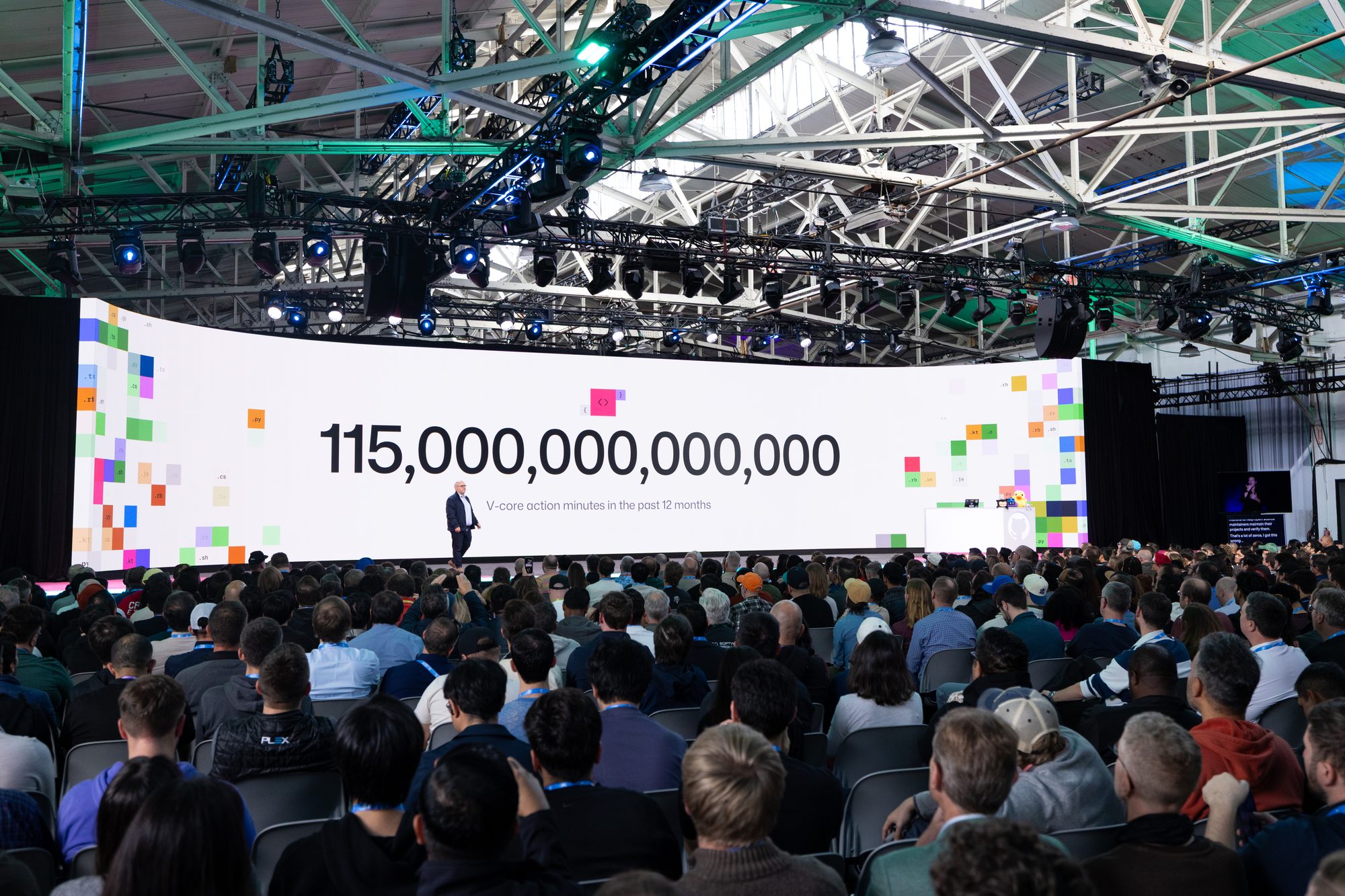
We also shared that GitHub has donated over 115 trillion v-core Actions minutes to open source in the past 12 months to help maintainers build and verify their projects. GitHub Actions now runs a job 1,440 times every second – 124 million a day – which tells you just how much of that safety net is now running on autopilot.
You have to define what “good” is
The thing I really wanted to get across is this:
It’s no good building and shipping faster unless you’re building the right things.
AI is an incredible accelerator. But an accelerator without a steering wheel never ends well.
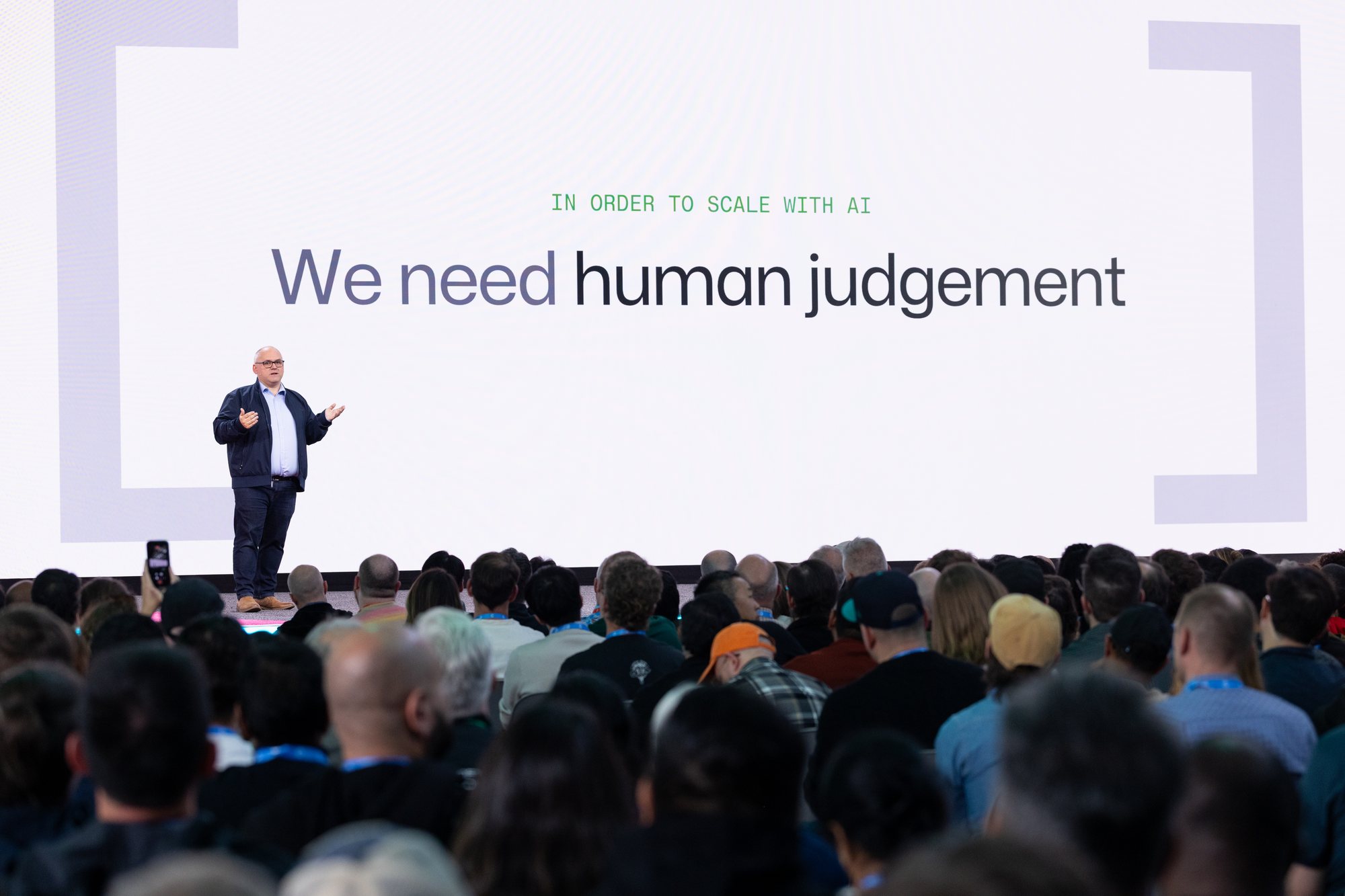
Someone still has to understand the problem. Someone has to decide who it’s for, what trade-offs are acceptable, what “done” looks like, and whether the thing we just shipped made the world a bit better or a bit worse. That’s business judgement, and it’s nothing AI can give you, I’m afraid.
That’s why they call it “work”. It’s your job to define what good is – only then can AI help you get there.
When you know what good looks like, you can guide your agents toward it. You can spot when they’ve drifted. You can tell the diamond from the slop. Do you need to read every line of code? With the appropriate safe guards I don’t think you do. But that’s also one of the many reasons we’ll always need developers. Picking the right tool for the job? That’s judgement too.
Learn by doing (and occasionally by soldering at midnight)
I’m constantly feeling out of date. Maybe you are too. The best cure I know is learning by doing.
That’s why my team builds the hackable badge for Universe every year. It started as a passion project of mine – an e-ink based device we built in partnership with Pimoroni – and has grown into a dual-core RP2350 Arm Cortex with a pile of sensors. It’s way more powerful than the computers I learnt to code on. The software this year was built with Copilot and the part that made it the most accessible and hackable badge yet. But the reason why we do the badges isn’t just because they are cool. It exists purely to give attendees a place to play outside of the day job.
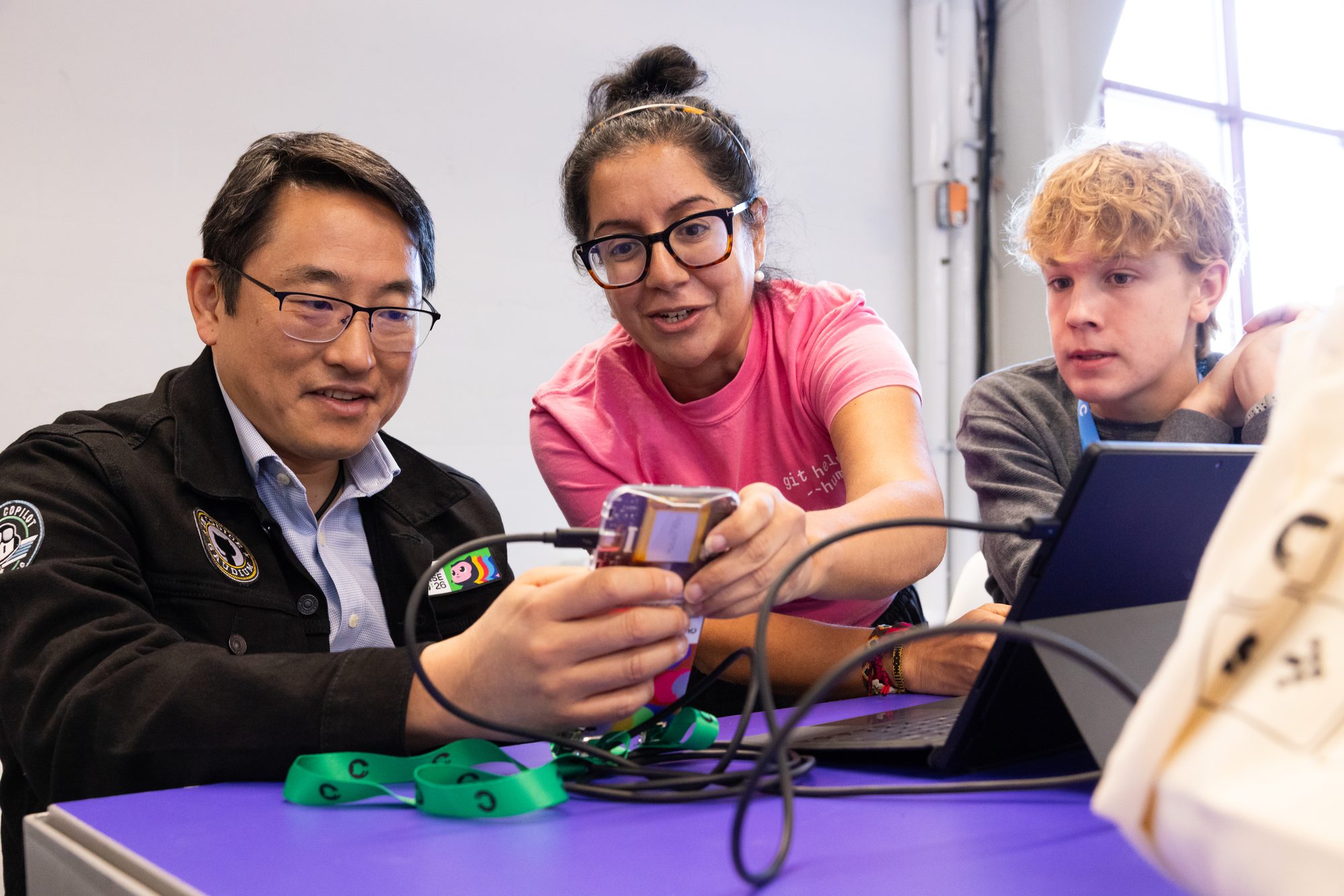
Last year it nearly didn’t happen. Supply chain shortages, and then a typhoon hit the screen manufacturer. The displays arrived at our San Francisco office the day before the event. So that night the office filled up with Hubbers and folks from our community, hand-assembling screens onto badges. No blaming. No complaining. Nobody had to be asked. People just turned up with whatever free minutes they had.
Culture is what happens when no one is looking.
That’s the bit AI can’t generate for you or simulate. The showing up.
Social coding, now with agents
A lot of today’s AI tooling is still pretty lonely: one developer, one agent, one private conversation, one enormous Markdown plan nobody else reads. Important architectural decisions end up being made in a chat window and a bunch of multi-choice questions your teammates will never see.
Maggie Appleton from GitHub Next showed a prototype called Chopin that flips that around – a shared planning space where teams of humans and agents think together, sketch UI, research options, capture decisions and who made them, and then turn the agreed plan into real tasks and pull requests. It makes planning feel less like grooming a backlog and more like creating together.
We demonstrated this by jointly planning a sharing feature for the pedometer app - combining the step counts on our badges to hit 10,000 shared steps, live on stage.

Did that need to happen? No. Did it bring me disproportionate joy when it eventually worked despite the massive amounts of 2.4GHz radio interference from the packed out audience? Absolutely. Teamwork is a creativity multiplier – for humans and agents.
Keep pushing at what is possible
AI makes it easier than ever to learn something new. But the real fun starts when you take the thing you just learnt and push it further than you imagined.
Which is how we ended up with a plushie demo, seeing which plushie would stay in the air the longest using a machine learning model we trained and deployed to the badge live on stage.
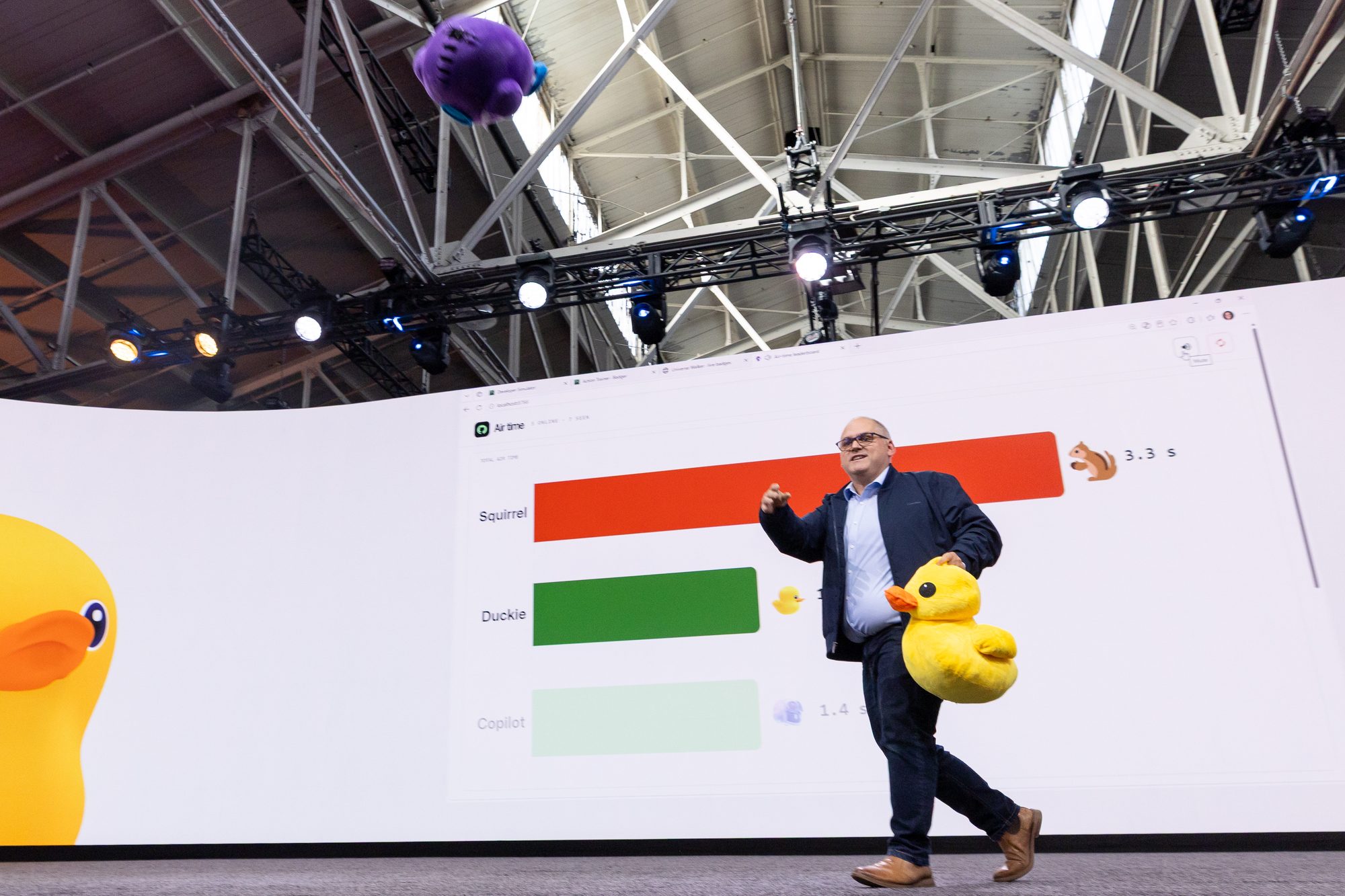
Very silly. Very delightful. And a genuinely useful reminder: the best things you’ll build in this new era will come from curiosity, taste and a willingness to look a bit daft in front of people. To say the obvious stuff out lound. No model is going to have that idea for you.
And yes – everyone holding a plushie at the end of the session walked out with 12 months of Copilot Max for free. Whimsy sometimes pays.
The way we build has changed. The why hasn’t.
The tools are completely different from when I started. But the reasons we do this aren’t. We love solving problems. We love building new things. We love working with each other and pushing the limits of what we know how to do.
And remember this:
AI does not, and cannot, replace the human heart in this equation.
You must continue to bring the creativity, the taste and the judgement.
AI will help you get there faster. But you choose where “there” is. You decide what good looks like. You bring the heart.
AI doesn’t write the story. You do.
Now go watch the talk, hug a plushie, and get building.